A criminal record does not automatically prevent you from becoming a U.S. citizen. Your eligibility depends on the offense, the date of the conduct, the sentence, the outcome of the case, and whether the record creates a naturalization bar or a separate risk of removal.
For many lawful permanent residents, the greatest concern is not simply whether USCIS will deny Form N-400. A criminal case may also cause USCIS to review how the applicant obtained a green card, whether prior applications were accurate, and whether the person may be deportable.
This article provides general legal information for New York residents. It is not a substitute for advice based on your specific criminal and immigration history. Before filing for naturalization, applicants with any arrest, citation, or conviction should consider having an attorney review their case to understand both criminal and immigration law.
Can You Become a U.S. Citizen With a Criminal Record?
Yes, many people with criminal records can still become U.S. citizens, but some offenses create permanent or temporary barriers.
USCIS does not treat every arrest or conviction the same way. The agency may consider:
- The exact criminal statute involved
- Whether the case resulted in a conviction
- The date of the offense and disposition
- The sentence imposed
- Time spent in jail
- Probation or parole
- Whether the applicant completed all court requirements
- Evidence of rehabilitation
- Whether the offense creates a ground of deportability
- Whether the applicant disclosed the matter truthfully
A dismissed misdemeanor may present a very different issue from a drug conviction, fraud offense, firearm offense, or aggravated felony. The label used by a New York court is not always controlling under federal immigration law.
What Does USCIS Review During Naturalization?
USCIS reviews the applicant’s criminal history, immigration history, background checks, prior applications, and conduct during the required good moral character period.
The naturalization process is not limited to the information written on Form N-400. USCIS generally conducts fingerprint-based background checks and may compare the application with government databases and prior immigration filings.
Applicants may be required to provide certified records for arrests, charges, convictions, dismissals, sentences, and completed court obligations.
Arrests and citations
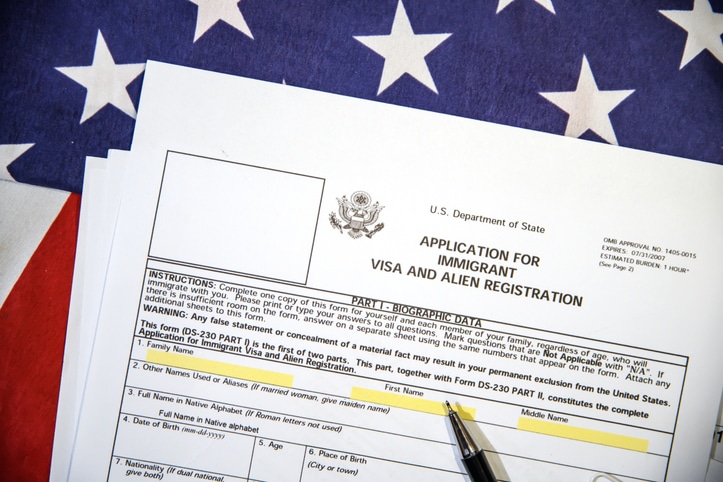
Form N-400 asks broad questions about arrests, citations, charges, and detention by law enforcement. An applicant may need to disclose an incident even when:
- The charge was dismissed
- The record was sealed
- No jail sentence was imposed
- The applicant was told the case would not appear on a background check
- The incident happened many years ago
- The case occurred outside New York or outside the United States
Failing to disclose a minor incident can create a larger problem than the incident itself. USCIS may view an inaccurate answer as evidence of dishonesty or, in some cases, false testimony given to obtain an immigration benefit.
Prior immigration filings
USCIS may compare Form N-400 with earlier visa, green card, asylum, adjustment, and renewal applications. Differences involving arrests, names, addresses, travel, marriages, or prior statements may lead to additional questioning.
Applicants should review their prior filings before the naturalization interview.
What Is the Good Moral Character Requirement?
Good moral character is a legal requirement that naturalization applicants must satisfy during the applicable statutory period and through the oath ceremony.
For most applicants, USCIS focuses on the five years immediately before filing Form N-400. For certain applicants applying based on marriage to a U.S. citizen, the period is generally three years.
The statutory period does not always limit USCIS to recent conduct. The agency may consider older events when deciding whether they reflect the applicant’s current character, especially when the conduct continued into the statutory period, or there is limited evidence of rehabilitation.
Can USCIS consider conduct older than five years?
Yes, USCIS may consider older conduct when evaluating present moral character.
An old conviction outside the five years may not create the same problem as a recent offense, but it should not be ignored. USCIS may examine:
- Whether the conduct was isolated or repeated
- Whether the applicant accepted responsibility
- Whether restitution, fines, and court obligations were completed
- Whether similar conduct occurred later
- Whether the conviction creates a permanent legal bar
- Whether the offense makes the applicant removable
Waiting five years does not automatically solve every criminal-history issue.
Which Crimes Can Permanently Prevent Naturalization?
Murder and certain aggravated-felony convictions can permanently prevent a finding of good moral character.
A murder conviction is a permanent bar. A conviction classified as an aggravated felony under federal immigration law on or after November 29, 1990, may also create a permanent bar to naturalization.
What is an aggravated felony?
An aggravated felony is a federal immigration category that includes numerous offenses listed in immigration law.
The term can be misleading. An offense may qualify as an aggravated felony even when New York calls it a misdemeanor or does not use the words “aggravated felony.” The analysis may depend on:
- The criminal statute
- The elements of the offense
- The sentence imposed
- The amount of loss in certain fraud cases
- The controlled substance involved
- The official record of conviction
Examples can include certain theft, fraud, drug-trafficking, firearm, obstruction, violence, and failure-to-appear offenses. Because the definition is technical, applicants should not rely only on the name of the conviction.
Which Criminal Offenses May Temporarily Block Citizenship?
Certain offenses or conduct during the statutory period may prevent an applicant from establishing good moral character.
Potential barriers include:
- Certain crimes involving moral turpitude
- Controlled-substance violations
- Multiple convictions resulting in significant combined sentences
- Confinement for 180 days or more
- False testimony for an immigration benefit
- Certain gambling-related conduct
- Habitual drunkenness
- Failure to support dependents
- Other unlawful conduct showing poor moral character
Some statutory exceptions may apply, and not every offense within these broad categories has the same result.
What is a crime involving moral turpitude?
A crime involving moral turpitude is generally an offense involving fraud, theft with wrongful intent, or conduct considered seriously dishonest or depraved.
There is no single complete list. USCIS and immigration courts usually analyze the elements of the statute rather than relying on a general description of what happened.
Common New York charges requiring careful review include:
- Petit larceny
- Shoplifting-related offenses
- Fraud
- Identity theft
- Forgery
- Certain assault offenses
- Some sexual offenses
- Certain offenses involving false statements
A minor-looking conviction can carry significant immigration consequences depending on the statutory language and record.
Can a Misdemeanor Prevent U.S. Citizenship?
Yes, a misdemeanor can delay or prevent naturalization if it falls within a disqualifying immigration category or negatively affects good moral character.
The word “misdemeanor” does not answer the immigration question. USCIS will look at the offense itself, the sentence, the date, and the surrounding record.
A misdemeanor may create problems when it involves:
- Theft
- Fraud
- Drugs
- Domestic violence
- Firearms
- Repeated alcohol-related conduct
- Violation of an order of protection
- False statements
- Multiple offenses during the statutory period
A single low-level offense may be manageable in some cases, but no applicant should assume that a misdemeanor is automatically harmless.
Can a Felony Conviction Prevent Citizenship?
Yes, a felony can prevent citizenship, but the result depends on whether it is an aggravated felony, another statutory bar, or evidence that the applicant lacks good moral character.
Some felonies create a permanent naturalization bar. Others may affect eligibility only during the statutory period or may be considered as part of USCIS’s discretionary review.
A felony can also create a separate deportation risk. An applicant may be denied naturalization and referred for removal proceedings if USCIS determines that the conviction makes the person deportable.
Do Arrests or Dismissed Charges Affect Citizenship?
An arrest or dismissed charge does not automatically disqualify an applicant, but USCIS may still review the incident and underlying conduct.
A dismissal is usually better than a conviction, but it does not remove the duty to answer Form N-400 accurately.
USCIS may request:
- A certified certificate of disposition
- The charging document
- A police or arrest report
- Proof that the case was dismissed
- An explanation of the circumstances
- Evidence that no further charges were filed
An applicant should be careful when explaining the underlying facts. Statements made during the N-400 process may affect both naturalization eligibility and potential removal exposure.
Do Sealed or Expunged Cases Have to Be Disclosed?
Yes, applicants generally must disclose criminal matters even when a record has been sealed, expunged, dismissed, or otherwise restricted from public access.
New York sealing rules do not prevent federal immigration authorities from asking about the case. Sealing may limit public access, but it does not necessarily eliminate the immigration effect of a conviction.
The applicant should distinguish two separate questions:
- Must the case be disclosed?
- Does the case still count as a conviction under immigration law?
The answer to the first question is often yes. The second requires analysis of the disposition and the reason for any later relief.
How Does Immigration Law Define a Conviction?
Immigration law may treat a case as a conviction even when state law does not use that label.
A disposition may qualify as an immigration conviction when:
- A judge entered a formal judgment of guilt, or
- The person admitted guilt, pleaded guilty or no contest, or admitted facts sufficient for guilt, and
- A court imposed punishment, a penalty, or a restraint on liberty
This definition can include some diversion or deferred-adjudication programs.
For example, a case may still count for immigration purposes when the court withheld a final judgment but required community service, probation, treatment, or another penalty after a guilty plea or admission.
How Are Common New York Dispositions Treated?
Common New York criminal dispositions require individual immigration analysis because state-law terminology does not determine the federal result.
Adjournment in contemplation of dismissal
An adjournment in contemplation of dismissal, commonly called an ACD, may avoid a criminal conviction under New York law. Its immigration treatment depends on whether the defendant made a plea or admission and whether a penalty or restraint was imposed.
Applicants should obtain the complete court record rather than relying only on a certificate showing that the case was dismissed.
Disorderly conduct
Disorderly conduct is generally a violation rather than a crime under New York law. Even so, USCIS may review the conduct, the plea record, and whether the incident forms part of a larger pattern.
Youthful offender adjudication
A New York youthful offender adjudication is generally not treated the same as an adult criminal conviction. However, USCIS may still consider the underlying conduct when evaluating good moral character.
Conditional discharge
A conditional discharge may still be part of a conviction and sentence. Applicants should confirm that all conditions were completed and obtain documentation from the court.
Vacated convictions
A vacated conviction does not always disappear for immigration purposes. Relief based on a substantive or procedural defect may receive different treatment from relief granted solely for rehabilitation or to avoid immigration consequences.
The court order, motion papers, legal basis, and transcript may all matter.
Can You Apply for Citizenship While on Probation or Parole?
USCIS generally will not approve naturalization while an applicant remains on probation, parole, or under a suspended sentence.
Completing probation or parole does not automatically establish eligibility. USCIS may still consider the conviction, the timing, the person’s conduct, and whether the case creates a statutory bar or removal ground.
Applicants should also avoid filing too soon after completing a sentence without evaluating whether enough time has passed to demonstrate rehabilitation.
How Long Should You Wait After a Conviction?
There is no universal waiting period after a conviction.
The correct timing depends on the type of offense and its immigration consequences.
| Situation | Main concern | Possible approach |
| Permanent naturalization bar | Legal ineligibility | Obtain a detailed crimmigration analysis |
| Offense within the statutory period | Good moral character | Consider waiting and documenting rehabilitation |
| Active probation or parole | Approval unavailable or unlikely | Review after completion |
| Old conviction | Discretionary and removal risks | Analyze before filing |
| Pending criminal case | Unresolved facts and disposition | Coordinate criminal and immigration strategy |
| Potentially defective plea | Continuing immigration consequences | Evaluate post-conviction relief |
An applicant should not calculate a filing date based only on the fifth anniversary of a conviction. The date of the conduct, conviction, sentence completion, probation, and later behavior may all be relevant.
Can Filing Form N-400 Trigger Deportation?
Yes, filing Form N-400 can expose an existing ground of deportability, although filing does not automatically lead to removal proceedings.
Naturalization requires USCIS to review the applicant’s immigration and criminal history. That review may reveal that the person:
- Was inadmissible when granted permanent residence
- Has a deportable criminal conviction
- Failed to disclose material information in an earlier case
- Traveled after a conviction that affected admissibility
- Made an inaccurate statement in a prior application
- Is subject to a criminal ground of removal
Potentially serious categories include controlled-substance offenses, aggravated felonies, firearm offenses, crimes involving moral turpitude, domestic-violence offenses, and violations of protection orders.
A person who may be removable should not file Form N-400 simply to see whether USCIS approves it.

What Documents Should You Collect Before Filing?
Applicants should obtain complete records for every arrest, citation, charge, and conviction before submitting Form N-400.
Useful records may include:
- A certified certificate of disposition
- The accusatory instrument or charging document
- Plea minutes or plea transcript
- Sentencing minutes
- The sentencing order
- Proof of completed probation or parole
- Proof that fines, restitution, programs, and community service were completed
- Sealing, dismissal, pardon, or vacatur orders
- Motion papers supporting post-conviction relief
- Police or arrest records when legally relevant
- Copies of prior immigration applications
- FBI and state criminal-history records when appropriate
When a court no longer has a record, the applicant may need a certified statement confirming that the document is unavailable.
What Evidence Can Help Prove Good Moral Character?
Evidence of rehabilitation and responsible conduct may help when no permanent statutory bar applies.
Helpful evidence can include:
- Stable employment
- Tax compliance
- Support of children and dependents
- Community or religious involvement
- Counseling or treatment
- Educational progress
- Restitution payments
- Completion of all court requirements
- Letters from employers or community members
- A long period without further misconduct
Positive evidence cannot overcome every legal bar, but it may help USCIS evaluate discretionary good moral character.
When Should You Speak With a New York Crimmigration Lawyer?
You should obtain legal advice before filing if your record could affect both naturalization and deportability.
A pre-filing review is especially important when the record involves:
- Any felony
- Drug possession, sale, or trafficking
- Theft, shoplifting, fraud, or identity theft
- Domestic violence
- A firearm
- Violation of an order of protection
- Multiple arrests or convictions
- Jail time of 180 days or more
- Pending probation or parole
- A sealed or vacated conviction
- Missing court records
- Different answers on prior immigration applications
- International travel after a conviction
A crimmigration review should identify the exact statute, determine whether the disposition counts as a conviction, assess good moral character, and evaluate any risk of removal before Form N-400 is filed.
Conclusion
A criminal record does not automatically prevent U.S. citizenship, but naturalization can involve much more than counting years since an arrest or conviction.
USCIS may examine the criminal statute, sentence, court record, underlying conduct, rehabilitation, prior immigration filings, and potential grounds of deportability. New York outcomes such as sealed cases, ACDs, youthful offender adjudications, conditional discharges, and vacated convictions can require careful federal immigration analysis.
The safest approach is to gather complete records and obtain individualized advice before filing. The Law Office of Yifei He PLLC assists New York clients with issues at the intersection of criminal defense and immigration law. This article provides general information and does not create an attorney-client relationship or replace legal advice for a specific case.

Frequently Asked Questions
Can USCIS see a sealed criminal record?
USCIS may obtain information about a sealed case through federal background checks, prior government records, or the applicant’s disclosures. A New York sealing order does not eliminate the obligation to answer Form N-400 truthfully.
What happens if I forget to disclose an arrest?
Failing to disclose an arrest may lead to additional questioning, delay, denial, or concerns about false testimony. Correcting an honest mistake promptly is generally better than allowing an inaccurate answer to remain unaddressed.
Can a DUI or DWI prevent citizenship?
A single DUI or DWI does not always prevent naturalization, but USCIS may consider the circumstances, repeated alcohol-related conduct, injuries, probation, and evidence of rehabilitation. Multiple incidents may create a more serious good moral character problem.
Can I reapply after Form N-400 is denied?
Many applicants can reapply after a denial, but the reason for denial must be addressed first. Refiling without correcting the legal or evidentiary problem may lead to another denial and could increase immigration risk.
Does a pardon erase a conviction for immigration purposes?
A pardon may eliminate certain immigration consequences in limited circumstances, but it does not erase every conviction or guarantee naturalization eligibility. The type of offense and the legal effect of the pardon must be reviewed individually.
Can post-conviction relief help me qualify for citizenship?
Post-conviction relief may help when a conviction is vacated because of a genuine legal or constitutional defect. Relief granted only for rehabilitation or immigration hardship may not eliminate the conviction for immigration purposes.
Request Consultation
Memberships & Associations