
Being arrested after entering the United States without authorization can lead to more than an immigration case. Federal prosecutors may bring criminal charges, immigration authorities may pursue removal, and Immigration and Customs Enforcement (ICE) may continue holding someone even after the criminal case ends.
For individuals and families, these overlapping proceedings can be confusing. A person might face a federal criminal court appearance while also worrying about deportation, an immigration bond, or prolonged detention.
Criminal prosecution for illegal border entry generally involves two federal statutes: 8 U.S.C. § 1325, which addresses improper entry, and § 1326, which addresses certain forms of reentry after removal. Understanding the difference between criminal prosecution and civil immigration detention is essential to identifying available legal options, including whether a federal habeas corpus petition may challenge unlawful custody.
Is Entering the United States Illegally a Federal Crime?
Yes. Entering or attempting to enter the United States in certain prohibited ways can constitute a federal crime under 8 U.S.C. § 1325, even if the person has no prior criminal record.
The statute identifies three principal forms of improper entry:
- Entering or attempting to enter the United States at a place or time immigration officials do not designate.
- Avoiding examination or inspection by immigration officers.
- Attempting to enter or obtaining entry through willfully false or misleading statements or the intentional concealment of material facts.
For example, someone who crosses the border outside of, and between official ports of entry, may face prosecution under § 1325(1).
However, not every immigration violation is a federal crime.
A person who lawfully enters the country on a temporary visa but remains after the authorized period expires generally faces a civil immigration violation, not a criminal improper-entry charge merely because of the overstay.
This distinction matters because criminal prosecution can involve imprisonment and a federal criminal record, while civil immigration proceedings primarily determine whether someone may remain in the United States.
Source: 8 U.S.C. § 1325 — Improper Entry.
What Are the Federal Penalties for Illegal Entry and Illegal Reentry?
Federal penalties depend on whether the government charges improper entry under 8 U.S.C. § 1325 or illegal reentry following a qualifying prior removal under 8 U.S.C. § 1326.
Although these offenses sound similar, they have different legal elements and sentencing consequences.
Improper Entry Under 8 U.S.C. § 1325
For a first offense under § 1325(a), the maximum prison sentence for a misdemeanor is generally six months.
A subsequent offense under the same provision may carry imprisonment of up to two years. Criminal fines may also apply.
Illegal Reentry After Removal Under 8 U.S.C. § 1326
Section 1326 generally concerns individuals who return, attempt to return, or are found in the United States after certain prior exclusions, deportations, or removals, without meeting applicable requirements for permission to return. A previous removal order alone does not establish every element of an illegal-reentry offense. The government must prove the elements the statute requires.
A basic violation carries a maximum sentence of two years.
Higher statutory penalties may apply when specified previous criminal convictions or other circumstances are present.
| Federal offense | Statutory maximum imprisonment |
| First improper-entry offense under § 1325(a) | 6 months |
| Subsequent improper-entry offense under § 1325(a) | 2 years |
| Basic illegal reentry under § 1326(a) | 2 years |
| Illegal reentry with certain qualifying prior convictions under § 1326(b)(1) | 10 years |
| Illegal reentry following an aggravated felony conviction under § 1326(b)(2) | 20 years |
Other specialized provisions of § 1326 impose additional rules.
These are statutory maximums, not automatic sentences. Actual sentencing depends on the judge and considers the charge, the Defendant’s criminal history, applicable sentencing guidelines, facts, and other relevant considerations.
Source: 8 U.S.C. § 1326 — Reentry of Removed Noncitizens.
What Happens After Someone Is Arrested for Illegal Border Entry?
After an illegal border entry arrest, federal authorities may pursue criminal prosecution, civil immigration proceedings, or both, depending on the circumstances.
Not every apprehension results in criminal charges. When prosecutors do bring charges, the process may include several stages.
Initial Apprehension and Federal Criminal Proceedings
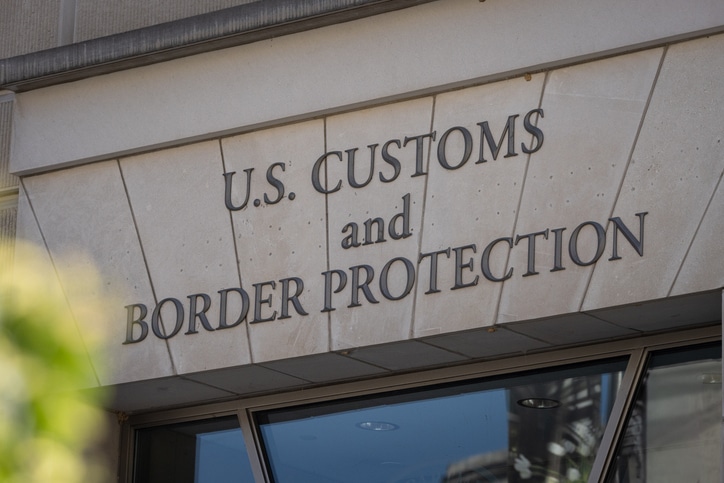
Customs and Border Protection (CBP) may apprehend someone suspected of improper entry and refer the case for federal prosecution.
If charges are filed, the individual may appear before a federal magistrate judge, who will address issues involving counsel, release, and detention.
A federal criminal prosecution may involve:
- An initial court appearance and explanation of the charges.
- Appointment of criminal defense counsel when required.
- Review of evidence and available defenses.
- Plea negotiations or trial.
- Sentencing if the person is convicted.
A person charged with a federal crime has constitutional protections, including the right to counsel in qualifying criminal proceedings.
What Happens When the Criminal Case Ends?
The conclusion of the criminal case does not necessarily mean the person will be released into the community.
For example, someone may complete a federal sentence and then be transferred to ICE custody for immigration removal proceedings.
Alternatively, federal criminal charges may be dismissed, yet immigration authorities may continue detention under a separate legal basis.
This is why families should determine whether their loved one is being held by federal criminal authorities, ICE, or another agency acting on their behalf.

How Is Federal Criminal Detention Different From ICE Detention?
Federal criminal detention is connected to a criminal prosecution or sentence, while ICE detention is generally civil custody used to administer immigration law.
A person may experience both forms of custody, but they operate under different legal rules.
| Issue | Federal criminal detention | ICE immigration detention |
| Primary purpose | Criminal prosecution or punishment | Immigration processing or removal |
| Government authority | Federal criminal justice system | Department of Homeland Security |
| Court involved | U.S. federal district court | Immigration court or other authorized tribunal |
| Release determination | Federal criminal release and detention rules | Immigration detention statutes and applicable bond rules |
| Legal representation | Right to appointed counsel when legally required | Generally no government-funded counsel in ordinary removal proceedings |
| Potential result | Acquittal, dismissal, conviction, or sentence | Release, continued detention, removal, or immigration relief |
A criminal court’s decision to release someone does not automatically terminate ICE custody.
Likewise, an immigration judge generally cannot dismiss federal criminal charges.
Which Immigration Detention Laws Apply?
Three federal statutes are especially important:
8 U.S.C. § 1225: Addresses the inspection and detention of certain applicants for admission, including individuals subject to specified border-processing procedures.
8 U.S.C. § 1226: Governs arrest and detention while decisions about removal are pending, including certain discretionary and mandatory detention situations.
8 U.S.C. § 1231: Governs detention after a removal order becomes administratively final, subject to the statute’s requirements and other applicable legal rules.
The applicable statute can significantly affect eligibility for release, administrative hearings, and federal court review.
Can Someone Obtain an Immigration Bond Hearing After an Illegal Entry Arrest?
An immigration bond hearing may be available in some cases, but eligibility depends on the person’s detention classification and applicable federal law.
An immigration bond permits release from ICE custody under specified conditions. It is different from bail in a federal criminal case.
Under § 1226(a), certain detained individuals may seek review of a DHS custody determination by an immigration judge.
However, not everyone detained by ICE is eligible for an immigration judge bond hearing.
Why Does the Detention Statute Matter?
In Matter of Yajure Hurtado, 29 I&N Dec. 216 (BIA 2025), the Board of Immigration Appeals concluded that immigration judges lack authority to grant bond to individuals present in the United States without admission who are detained under § 1225(b)(2)(A).
This ruling is particularly important for people who entered without inspection, although subsequent federal court decisions and case-specific circumstances may affect the available remedies.
Other forms of detention, including certain detention following a final removal order, involve different restrictions.
A person should not assume that an illegal-entry charge automatically guarantees or eliminates the possibility of release. An attorney must examine the governing detention statute, procedural history, and applicable court decisions.
See the Department of Justice’s guidance on immigration bond proceedings.
Can Habeas Corpus Challenge Unlawful ICE Detention?
Yes. A habeas corpus petition may allow a person to challenge the legality of immigration detention in federal court when the court has jurisdiction, and the claim satisfies applicable legal requirements.
Under 28 U.S.C. § 2241, federal courts may consider certain petitions alleging custody in violation of federal law or the U.S. Constitution.
A habeas petition is separate from the underlying immigration case and from any federal criminal prosecution.
When Might Habeas Corpus Be Appropriate?
Depending on the circumstances, habeas corpus may be considered when:
- Immigration detention allegedly lacks a lawful statutory basis.
- Prolonged detention raises constitutional or statutory concerns.
- The government continues detention after a final removal order under circumstances that may violate applicable limits.
- A person alleges that required detention procedures or protections have been denied.
For example, prolonged detention after a final removal order may raise legal questions when there is no significant likelihood of removal in the reasonably foreseeable future. The applicable standards depend on the circumstances and governing law.
Can a Habeas Petition Result in Release?
A successful habeas challenge may result in a court ordering release, requiring additional proceedings, or granting another remedy authorized by law.
However, filing a habeas petition does not guarantee release or automatically stop deportation.
Federal law imposes important limits on habeas jurisdiction, especially when a claim effectively challenges a removal order rather than the legality of detention.
Under 8 U.S.C. § 1252, most challenges to final removal orders must proceed through the designated judicial review process, generally involving a petition for review in a federal court of appeals. Expedited removal cases have additional restrictions.
A habeas petition also does not ordinarily replace the procedures for challenging a federal criminal conviction or sentence.
Where Should a Habeas Petition Be Filed?
For a traditional habeas challenge to present physical custody, the proper federal district is generally the district where the person is confined, subject to applicable jurisdictional rules.
This can create complications when ICE transfers someone from a detention facility in New York to another state.
The person’s location, the identity of the proper respondent, the timing of filing, and the nature of the claim may all matter.
Families seeking assistance can learn more about habeas corpus representation in New York.

What Legal Defenses and Immigration Consequences Should Be Considered?
Defenses to improper-entry or illegal-reentry charges depend on the statutory elements, the evidence, prior immigration history, and the circumstances surrounding the alleged conduct.
Federal prosecutors must prove each and every element of the charged offense. A defense attorney may examine whether the evidence establishes those elements beyond a reasonable doubt, and whether legal or constitutional objections are available.
Can a Prior Deportation Order Be Challenged?
In certain § 1326 prosecutions, a defendant may seek to challenge the validity of the underlying removal order.
However, § 1326(d) establishes strict requirements, including exhaustion of available administrative remedies, improper deprivation of judicial review, and fundamental unfairness.
A prior removal order is therefore not automatically challengeable simply because a new criminal case has been filed.
Can Criminal Charges Affect Immigration Relief?
Yes. Criminal charges, convictions, admissions, and relevant conduct may affect immigration proceedings, depending on the specific offense and relief sought.
Potential consequences can include questions involving admissibility, deportability, eligibility for immigration relief, and discretionary decisions.
A conviction under § 1325 does not automatically establish that every form of immigration relief is unavailable.
Someone who fears persecution or torture in their country of origin may have protection-related claims requiring separate analysis. However, asylum eligibility is subject to statutory restrictions, regulations, and applicable procedures. Criminal prosecution does not, by itself, determine asylum eligibility. However, it does play a part in discretionary relief such as asylum.
Before accepting a criminal plea, a noncitizen should receive advice about its immigration consequences. Coordination between criminal defense and immigration counsel can be especially important.
For more information, see the firm’s Crimmigration practice.
What Should Families Do When a Loved One Is Detained?
Families should first identify which agency holds their loved one, where the person is detained, and whether criminal charges or immigration proceedings have begun.
These facts help determine which court, agency, or attorney to contact.
How Can You Locate Someone in ICE Custody?
The ICE Online Detainee Locator System allows searches by A-number and country of birth, or by identifying biographical information.
The system can locate people currently in ICE custody and certain people who have been in CBP custody for more than 48 hours. It does not provide records for individuals under 18.
If ICE cannot locate a person, that does not necessarily mean the person has been released. Records may be unavailable, identifying information may not match, or the person may be held under a different custodial arrangement.
What Information Should Families Collect?
Useful records include the person’s full legal name, date of birth, A-number (if known), detention location, and any available court or immigration paperwork.
Families should also preserve:
- Federal criminal charging documents and case numbers.
- Notices to Appear and immigration hearing notices.
- Previous removal or deportation orders.
- Bond decisions and custody paperwork.
- Relevant immigration applications and prior attorney correspondence.
Avoid assuming what a detained person should tell investigators or immigration officials. Statements can affect both criminal and immigration proceedings.
Promptly contacting qualified counsel is particularly important when a court appearance, removal deadline, or detention transfer is involved.
How Can a New York Crimmigration Attorney Help?
A New York attorney experienced in the intersection of criminal and immigration law can help assess federal charges, immigration detention, and possible federal court representation.
Depending on the matter and the attorney’s authorized scope of representation, legal assistance may involve reviewing criminal allegations, appearing at criminal proceedings, identifying immigration consequences, assessing detention authority, evaluating bond options, or determining whether a habeas petition is appropriate.
At The Law Office of Yifei He PLLC, families can seek a case-specific assessment of overlapping criminal and immigration concerns, including available options involving ICE detention and removal defense.
Understanding the relationship between these proceedings can help avoid decisions in one case that create additional problems in another.
What Should Families Remember About Criminal Prosecution for Illegal Border Entry? (Conclusion)
Criminal prosecution for illegal border entry can create two separate legal problems: a federal criminal case and an immigration custody or removal matter.
Under §§ 1325 and 1326, federal charges may carry penalties ranging from months to years in prison. Even when criminal proceedings end, ICE may have a separate legal basis to continue detention.
In some circumstances, an immigration bond hearing may be available, while habeas corpus may provide a separate way to challenge unlawful detention. Neither remedy is automatic, and both depend on the applicable law and facts.
For individuals and families dealing with these issues in New York, early coordination of criminal defense and immigration advice is especially important.
You can contact the Law Office of Yifei He PLLC to discuss your circumstances and whether representation or referral for a particular federal proceeding is appropriate.
This article provides general legal information, not individualized legal advice. Immigration statutes, detention rules, and judicial interpretations can change. The appropriate course of action depends on the person’s immigration history, criminal case, custody status, and applicable law.
What Questions Do Families Frequently Ask About Illegal Border Entry and ICE Detention? (FAQ)
Questions about criminal prosecution and ICE custody often involve whether a person can be released, deported, or held after a criminal case ends.
1. Can Someone Be Deported After Federal Criminal Charges Are Dismissed?
Yes. Dismissal of federal criminal charges does not automatically prevent immigration authorities from pursuing removal.
Criminal prosecution and removal proceedings use different legal standards and serve different purposes. ICE may continue a separate immigration case even when prosecutors do not obtain a criminal conviction.
2. Does Time Served in Federal Criminal Custody Count Toward ICE Detention?
Not automatically. Different legal rules govern criminal custody and immigration custody.
Time spent serving a criminal sentence generally does not simply count toward a separate immigration detention period as though the two were one sentence. Certain statutory detention periods and custody histories may nevertheless affect the legal analysis.
3. Can Someone Seek Asylum After Being Charged With Illegal Entry?
Potentially, yes. An improper-entry charge does not automatically prevent a person from raising an asylum or other protection claim.
However, eligibility depends on numerous factors, including the person’s circumstances, filing requirements, applicable restrictions, prior immigration history, and criminal history. An attorney should evaluate protection claims separately from the federal criminal charge.
4. Can ICE Transfer Someone Out of New York While a Habeas Case Is Pending?
ICE may transfer detained individuals between facilities, including facilities in different states.
A transfer can complicate communication and raise questions about jurisdiction, although its effect on an existing habeas proceeding depends on the legal circumstances. Families should immediately notify counsel of any transfer.
5. Can a Federal Judge Order an Immigration Bond Hearing?
A federal court may order appropriate relief in a qualifying case involving unlawful detention, and that relief can sometimes include a hearing.
However, whether a hearing is legally required or available depends on the detention statute, jurisdiction, applicable constitutional principles, and controlling court decisions. Habeas corpus does not guarantee an immigration bond hearing.
6. Is Illegal Reentry After Deportation Always Punishable by 20 Years in Prison?
No. The 20-year maximum under § 1326(b)(2) applies to a particular enhanced-penalty category involving a qualifying prior aggravated felony conviction. Other enhanced penalties may apply in different circumstances.
The actual sentence, if any, depends on the charges, evidence, applicable sentencing law, and case-specific factors.
Request Consultation
Memberships & Associations